A Glimpse into the Past
Mohenjo Daro is one of the most remarkable archaeological sites in Pakistan, located in Sindh on the right bank of the Indus River, about 80 kilometers southwest of Sukkur. Once a thriving urban settlement, it stood as one of the main centers of the ancient Indus Valley Civilization, which flourished between 2500 and 1700 BCE.
Together with its sister city, Harappa, situated in present-day Punjab, Mohenjo Daro formed the foundation of one of the earliest known urban societies in human history. The city’s ruins reveal how advanced and organized life was more than 4,000 years ago—offering a rare glimpse into the ingenuity, structure, and creativity of an ancient civilization that existed long before Greece or Rome.
Archaeologists believe that the inhabitants of Mohenjo Daro were skilled planners, engineers, and craftsmen who created a city that reflected both practicality and purpose. Every discovery at the site tells a story of a people who valued order, cleanliness, and community life. Spread across nearly five square kilometers, Mohenjo Daro was a meticulously designed city. Its streets were laid out in a precise grid pattern, running in straight lines and intersecting at right angles—a concept far ahead of its time. Houses, made from uniformly sized baked bricks, often had multiple stories and courtyards that allowed for ventilation and privacy.
What truly sets Mohenjo Daro apart is its advanced urban infrastructure. The city had an organized drainage and sanitation system that many modern towns would envy. Covered drains lined the streets, connected to soak pits and inspection holes for easy cleaning. This level of engineering sophistication suggests that hygiene and civic planning were key priorities for its residents.
Such evidence shows that the people of Mohenjo Daro understood urban management in ways that demonstrate a highly structured and cooperative society. Each neighborhood seemed to have its own wells, courtyards, and public spaces—reflecting thoughtful design and collective living.
The Citadel and Its Significance
At the heart of Mohenjo Daro stood a raised area known as the citadel, believed to have served administrative and ceremonial purposes. Among the most impressive structures here is the Great Bath, a large pool lined with watertight bricks and equipped with an advanced drainage system. It is thought to have been used for ritual bathing, highlighting the importance of cleanliness and spirituality in daily life.
Nearby stood a massive granary—an indication of centralized storage and food management—alongside large halls that may have been used for civic gatherings or governance. These features suggest that Mohenjo Daro was not just a residential city but also a center of administration, religion, and community decision-making.
Art, Craft, and Cultural Expression
The artifacts found at Mohenjo Daro reveal a society that celebrated art and craftsmanship. Archaeologists have uncovered beautiful pieces of jewellery, terracotta figurines, pottery, and tools that reflect everyday life. The most famous of these is the bronze “Dancing Girl,” a small yet captivating statue depicting a young woman with confident posture and expressive detail.
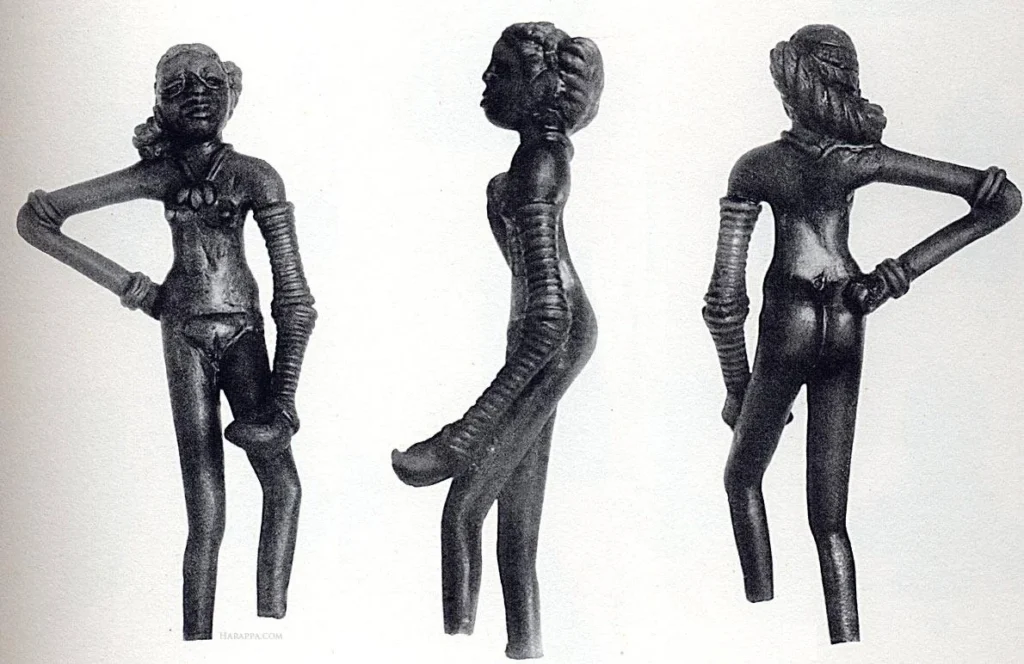
This sculpture embodies both artistic skill and cultural confidence—it shows that the people of Mohenjo Daro valued not only function and utility but also beauty and self-expression. The discovery of toys, seals, and household objects further suggests a population that enjoyed leisure, trade, and creativity in their lives.
The Mystery of Decline
Despite its brilliance, the story of Mohenjo Daro also carries an air of mystery. Archaeological evidence points to repeated flooding, possibly due to shifts in the Indus River’s course. Over time, these natural disasters may have weakened the city’s foundations and forced its inhabitants to move elsewhere. While the precise cause of its decline remains uncertain, many experts believe that changing river patterns, resource depletion, or climate variations played a role. Whatever the reason, the fall of Mohenjo Daro reminds us of how even the most advanced civilizations are vulnerable to nature’s forces.
In 1980, UNESCO recognized Mohenjo Daro as a World Heritage Site, acknowledging its immense contribution to human history. Today, it stands as a silent testament to a civilization that mastered city planning, architecture, and social organization thousands of years ago.
Efforts to preserve this ancient site continue, as exposure to harsh weather, floods, and tourism pose ongoing challenges. Conservation projects aim to protect the ruins while allowing scholars and visitors to explore and learn from its enduring legacy.
A Journey Through Time
Walking through the ancient streets of Mohenjo Daro feels like stepping into another era. Every brick, bath, and artifact tells a story of innovation and resilience. It’s a reminder that long before the modern world, people in this part of South Asia had already built a complex, thriving, and organized society.
As one of the crown jewels of Pakistan’s heritage, Mohenjo Daro continues to inspire wonder and curiosity. For history lovers and travelers alike, it offers not just a journey into the past—but a reflection on how civilization, at its best, endures through the ages.
To join our community, Visit Now