Watch the Journey Before You Read
Before diving into the story, watch the video above to start Exploring Mohenjo Daro through stunning visuals and narration. The video takes you on a walk through its ancient streets, intricate drainage systems, and timeless monuments—offering a rare glimpse into one of the world’s earliest and most advanced civilizations. Once you’ve watched, scroll down to discover the fascinating history behind this lost city.
A Civilization Ahead of Its Time
Exploring Mohenjo Daro reveals how deeply sophisticated urban life was over 4,000 years ago. Located in Sindh, Pakistan, on the right bank of the Indus River, about 80 kilometers southwest of Sukkur, Mohenjo Daro was one of the main centers of the Indus Valley Civilization, which thrived between 2500 and 1700 BCE. Together with its sister city Harappa, it formed the foundation of one of the earliest planned urban societies in human history—long before the rise of Greece or Rome.
Archaeologists believe the people of Mohenjo Daro were skilled engineers and city planners who built their home with precision and purpose. The city covered nearly five square kilometers and was laid out on a grid pattern, with straight streets intersecting at right angles. Houses were built with standardized baked bricks, often featuring courtyards and multiple stories for privacy and ventilation.
One of the most remarkable features discovered while Exploring Mohenjo Daro is its drainage and sanitation system. Covered drains lined the streets and connected to soak pits and inspection holes—an innovation that showcased a deep understanding of hygiene and civic order. Every element of the city’s design reflected careful planning and cooperation among its people.
The Citadel and Cultural Legacy
At the heart of Mohenjo Daro stood the citadel—a raised platform believed to have been the center of governance and ceremonial activities. The Great Bath, one of the most famous structures in the citadel, is a large pool lined with watertight bricks and equipped with advanced drainage. It was likely used for ritual bathing, symbolizing the city’s emphasis on purity, discipline, and spirituality.
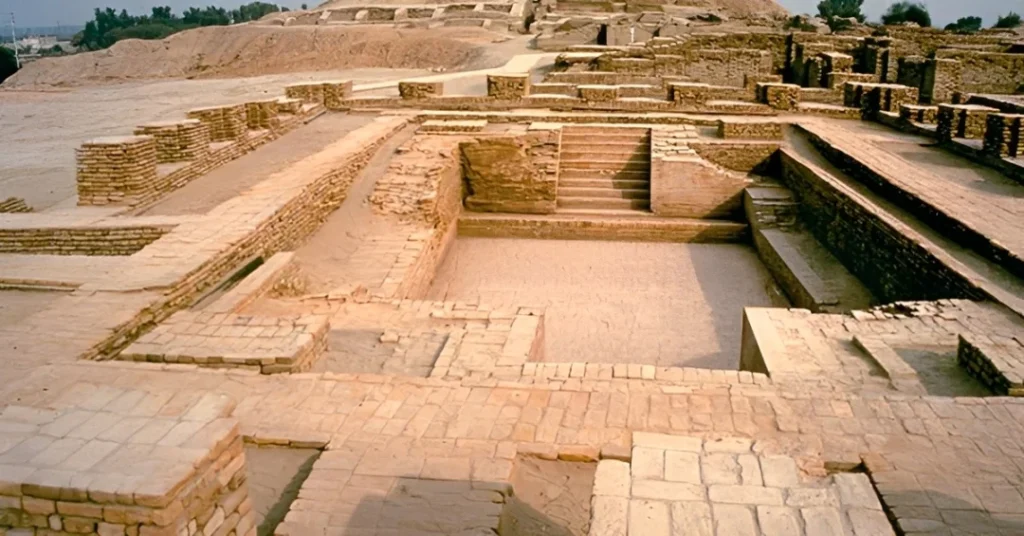
Nearby stood large granaries and assembly halls, suggesting centralized storage, civic gatherings, and administrative functions. These structures reveal that the people of Mohenjo Daro not only lived in well-planned homes but also participated in an organized system of governance and community life.
Artifacts uncovered during the process of Exploring Mohenjo Daro bring its culture vividly to life. The bronze Dancing Girl statue, with her poised stance and expressive detail, remains one of the most celebrated symbols of the Indus civilization. Alongside it, archaeologists have found pottery, tools, jewelry, and seals that speak of artistry, trade, and creativity. Even children’s toys discovered at the site show a civilization that valued joy, learning, and daily life beyond survival.
Mystery, Preservation, and Reflection
The mystery of Mohenjo Daro’s decline continues to intrigue historians. Repeated flooding and possible shifts in the Indus River’s course may have forced inhabitants to leave. Others point to climate change or resource depletion. Whatever the cause, the decline of this city serves as a powerful reminder of how nature shapes human destiny.
Recognized by UNESCO as a World Heritage Site in 1980, Mohenjo Daro remains a cornerstone of Pakistan’s cultural heritage. However, time and weather threaten its preservation. Ongoing conservation projects aim to protect the site while allowing future generations to keep Exploring Mohenjo Daro and learning from its enduring legacy.
Walking through the ruins today feels like stepping into another world. Every brick, bath, and artifact whispers stories of innovation, resilience, and community. Exploring Mohenjo Daro is not just a journey into the past—it’s a rediscovery of how human intelligence and creativity have shaped civilization itself.
To join our community, Visit Now