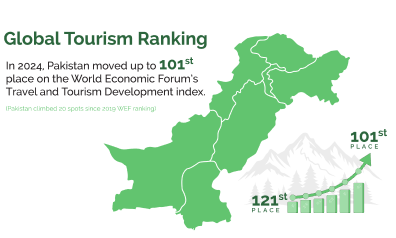
Tourism is shaping Pakistan’s economy as the country improved its position on the World Economic Forum’s Travel and Tourism Index, moving from 121st to 101st in 2024—reflecting progress in the sector.
Tourism revenue in Pakistan is expected to reach $30 billion by 2033, supported by infrastructure upgrades, visa reforms, and public investment.
Young content creators and social media influencers are helping promote Pakistan’s culture and destinations to international audiences.
In 2024, Pakistan moved up to 101st place on the World Economic Forum’s Travel and Tourism Development Index, showing progress in its tourism sector. The country is now working on improving by attracting more international visitors by improving its roads, facilities, promoting its scenic landscapes and cultural sites to help boost the local economy.
To enable and accelerate this growth, the Government of Pakistan has taken bold steps in policy reform and public investment. According to Statista, over Rs 1.4 trillion has been allocated toward infrastructure development, hospitality and eco-tourism initiatives. This includes road upgrades, airport expansions and the development of sustainable travel hubs. In 2024, visa policy was overhauled to promote “green tourism”, with simplified access granted to citizens of 126 countries. These measures aim to bring in more international visitors while promoting sustainable tourism that protects the environment and benefits local communities.
The World Bank expects that tourists could spend up to $30 billion in Pakistan by 2033. The figures reflect how tourism is shaping into an economic pillar for the country.
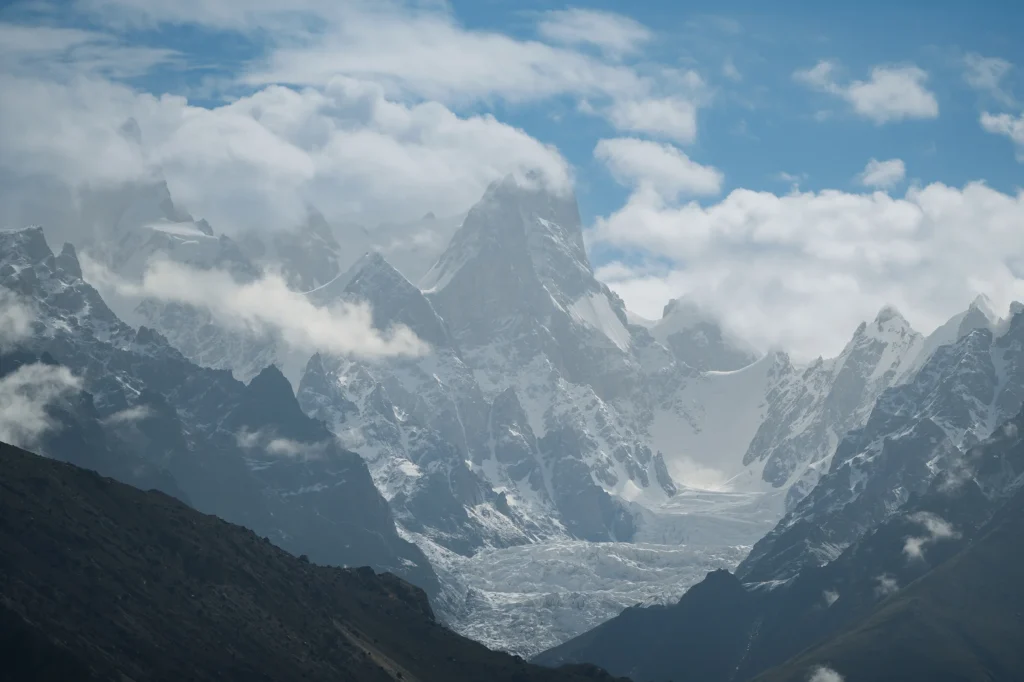
Pakistan offers access to some of the world’s highest peaks, including the Karakoram and Himalayan ranges, with destinations such as Skardu, Hunza and Fairy Meadows attracting trekkers and climbers.
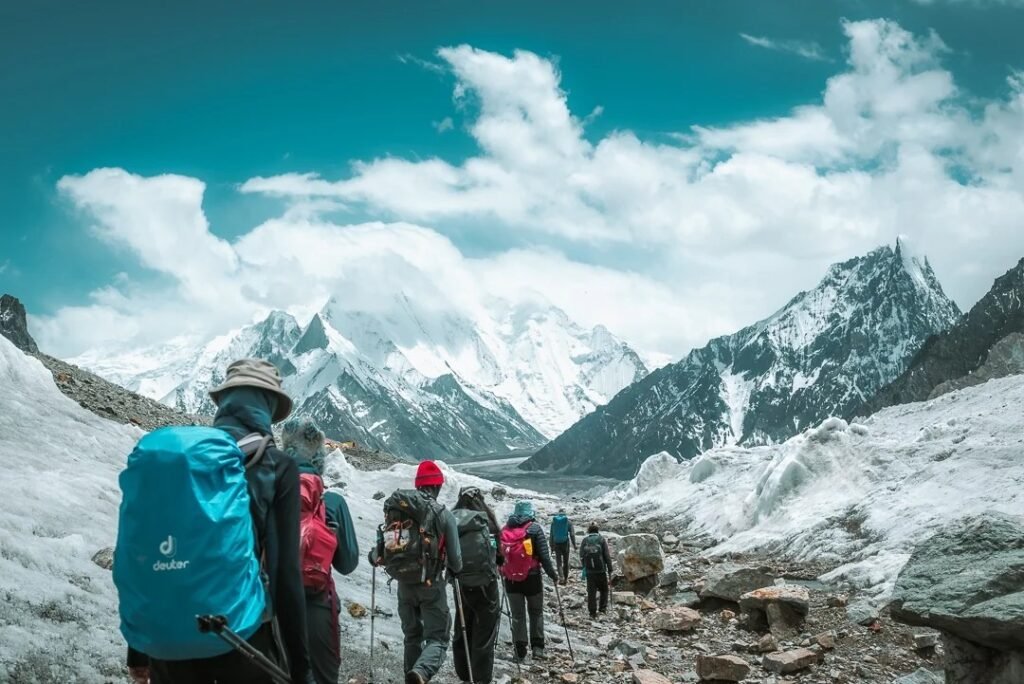
In contrast, the Thar Desert—ranked among the world’s 18 largest—presents a distinctly different landscape. Few countries provide the opportunity to experience snow-covered mountains and desert terrain within a single journey.
The country is home to some of South Asia’s most iconic heritage sites. UNESCO-protected ruins such as Taxila, Mohenjo-Daro and Harappa offer a glimpse into the ancient Indus Valley Civilization, while Swat’s Buddhist monuments tell the story of Pakistan’s pluralistic past. Cities like Lahore and Multan serve as living museums—where Mughal architecture, Sufi shrines centuries-old traditions coexist alongside modern infrastructure.
Social media influencers and foreign content creators are increasingly contributing to how Pakistan’s environment, traditions, and communities are perceived internationally. Their content highlights the country’s landscapes, daily life, food, and cultural diversity, helping to broaden global understanding. Community-led initiatives, especially in remote areas, have the potential to generate employment, protect local heritage, and offer visitors more genuine experiences. These initiatives also enable communities to play an active role in how their culture and environment are shared with the world.
At the same time, many young Pakistanis are using platforms such as YouTube, TikTok, and Instagram to share local stories and connect with wider audiences. This growing use of digital platforms is encouraging interest in lesser-known destinations and adding depth to the overall tourism narrative. By linking community-driven efforts with digital visibility, Pakistan can promote tourism that is inclusive, sustainable, and better connected to global audiences.
Backed by new policies, international partnerships, and a growing circle of cultural ambassadors, Pakistan is positioning itself as the next big player in global tourism. The sector has the potential to become a driving force for the economy and a key tool of cultural diplomacy. From mountain ranges to historic cities, Pakistan offers experiences that could attract a diverse mix of travelers. The challenge now lies in improving infrastructure, making travel easier, and ensuring sustainability so that this momentum translates into lasting impact.
For more insights and stories on tourism in Pakistan, please visit our official tourism’s page.
To join our community, Visit Now